
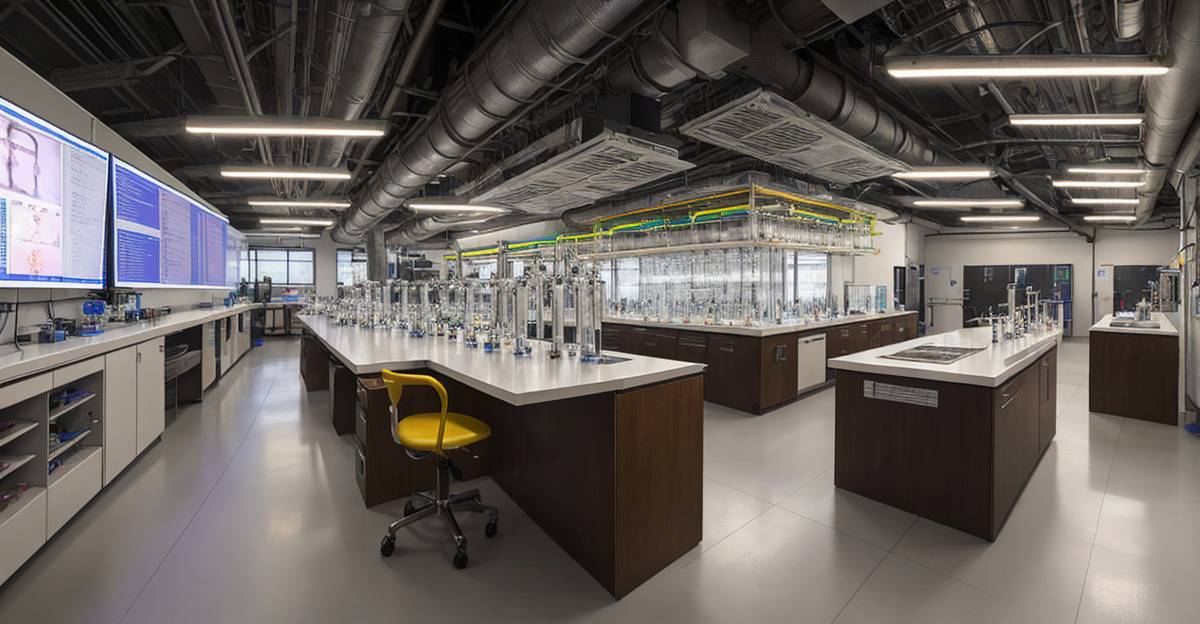
In the dynamic world of biotechnology, artificial intelligence (AI) is emerging as a game-changer, particularly in the realm of drug discovery. Traditionally, developing a new medicine has been a lengthy and expensive process, with approximately 90% of candidates failing to reach approval. However, AI is now transforming this landscape, offering unprecedented opportunities for faster, more efficient drug development.
Context & Background
Biotechnology has long been at the forefront of producing breakthrough medicines, yet the process of drug discovery and development remains painfully slow, often taking 10 to 15 years. AI is beginning to change this equation by improving efficiency in the earliest and most failure-prone stages of development (VanEck).
Analysis/Implications
AI is not only speeding up drug development but also reducing costs. For instance, an AI program at a major pharmaceutical company represents about $1 billion in R&D spending and has already begun to deliver results by moving drug candidates into later-stage clinical trials (BioSpace). Moreover, the AI-driven drug discovery platform Insilico has developed 28 AI-designed drugs, with nearly half already at a clinical stage, reflecting the real-world maturity of its generative AI pipeline (Crescendo AI).
Reaction from Industry
The pharmaceutical industry is taking notice of these developments. In 2021 alone, the startup ecosystem captured over 85% of healthcare AI spending, reflecting a significant shift towards large-scale commercialization (Crescendo AI). Eli Lilly, for example, invested $1 billion in an AI drug discovery lab with Nvidia, indicating the industry’s confidence in AI’s potential to transform drug development.
Perspective & Future
As agentic AI systems continue to drive transformation across industries, including healthcare, we can expect to see more investments in and applications of AI for drug discovery. The $4.9 trillion healthcare industry is deploying AI at more than twice the rate of the broader economy, suggesting that AI will play an increasingly prominent role in shaping the future of biotech (Crescendo AI).
Conclusion
AI is undeniably reshaping drug discovery, creating new opportunities and transforming the way we develop medicines. By improving efficiency and reducing costs, AI has the potential to revolutionize biotechnology and bring about a new era of innovation in healthcare.
FAQ
- How is AI speeding up drug discovery?
AI is helping to identify promising drug candidates more efficiently, reducing the time spent on failed candidates, and improving the overall success rate of clinical trials (VanEck). - What are some real-world examples of AI’s impact on drug discovery?
Insilico has developed 28 AI-designed drugs, with nearly half already at a clinical stage, demonstrating the real-world maturity and potential of generative AI in drug discovery (Crescendo AI). - How is the pharmaceutical industry reacting to these developments?
The pharmaceutical industry is increasingly investing in and adopting AI for drug discovery, with startups capturing over 85% of healthcare AI spending in 2021 (Crescendo AI). - What does the future hold for AI in biotechnology?
As agentic AI systems continue to evolve, we can expect to see more investments in and applications of AI for drug discovery, with AI playing an increasingly prominent role in shaping the future of biotech (Crescendo AI).